Categories
food

Popcorn!

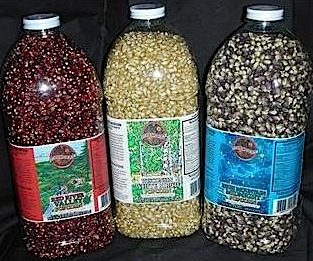
There aren’t many things as wonderful as good popcorn. One of the things I did for Christmas was to order some good popcorn. I’m not talking about the microwave stuff or the stuff you can find in the store, I’m talking good popcorn. Here’s what I got:

51V2LyGzNuL._SS500_.jpg

I pop it up on the stove and it is wonderful! As an added bonus, the pot I’m using has a transparent top, so I get to watch it too… I’ve found that if I add popcorn salt to it before it pops, I don’t need any butter! No really, it is that good. Finally, a snack I don’t feel guilty about…

Who says I can’t cook? LOL!

Categories
odds and ends

Star Wars as you’ve never seen it before

This is amazing…

My friend Jason is the one asking the questions. The “Hans?” bit is brilliant…

Categories
economics free market politics

From 1850

“The delusion of the day is to enrich all classes at the expense of each other; it is to engender plunder under pretense of organizing it.”

Quite so, some things never change…

Categories
economics

Gold, money, and economic worries

I just finished reading “What is seen and Unseen” (read some of my previous posts about that). The basic idea is that every time the government wants to do something, the government has to take the money from people first and we need to pay attention to that. It’s a nice way of organizing your thoughts about government spending, but it isn’t overly accurate now.

Back in Bastiat’s day, all currency was backed by something, usually a metal like gold or silver. In other words, every pound note distributed had a corresponding pound of silver to go with it. The government could only distribute as much money as it had in metal reserves. Today, we have what is called fiat money. It is worth something because the government says it is and everyone goes along with it. Nowadays, the government can make all the money it wants whenever it wants. See this post for an explanation about why that is bad…

There is a small, but vocal group that says that we need to go back to a metal standard in order to avoid the problems that fiat money can lead to. That has some appeal, but it is never going to happen. Milton Friedman had some ideas on how to make fiat money behave a lot like backed currency. A big part of that involved taking the discretionary power of fixing the value of money away from the Fed. That isn’t going to happen either. There are some technical issues involved that I won’t go into, but there are some more pressing issues. Back then, money was synonymous with cash. It was easy to keep track of how much money there was because there was only one kind. These days, there is far more electronic money than cash, how would you back that up with anything? I worry that current spending habits are incompatible with backed money.

The more I read, the more I think I should be buying gold….

Categories
books economics

The essence of economics

I received the Bastiat collection the other day (published by Mises.org) and as expected, I am totally blown away by it. He proves that you can get the essence of economics without having to be a mathematician or spend an eternity in college studying it. This is his introduction to the first essay in the book, the famous, “That which is seen, and that which is not seen.”

“In the economic sphere an act, a habit, an institution, a law produces not only one effect, but a series of effects. Of these effects, the first alone is immediate; it appears simultaneously with its cause; it is seen. The other effects emerge only subsequently; they are not seen; we are fortunate if we foresee them.

There is only one difference between a bad economist and a good one: the bad economist confines himself to the visible effect; the good economist takes into account both the effect that can be seen and those effects that must be foreseen.

Yet this difference is tremendous; for it almost always happens that when the immediate consequence is favorable, the later consequences are disastrous, and vice versa. Whence it follows that the bad economist pursues a small present good that will be followed by a great evil to come, while the good economist pursues a great good to come, at the risk of a small present evil.

The same thing, of course, is true of health and morals. Often, the sweeter the first fruit of a habit, the more bitter are its later fruits: for example, debauchery, sloth, prodigality. When a man is impressed by the effect that is seen and has not yet learned to discern the effects that are not seen, he indulges in deplorable habits, not only through natural inclination, but deliberately.

This explains man’s necessarily painful evolution. Ignorance surrounds him at his cradle; therefore, he regulates his acts according to their first consequences, the only ones that, in his infancy, he can see. It is only after a long time that he learns to take account of the others. Two very different masters teach him this lesson: experience and foresight. Experience teaches efficaciously but brutally. It instructs us in all the effects of an act by making us feel them, and we cannot fail to learn eventually, from having been burned ourselves, that fire burns. I should prefer, in so far as possible, to replace this rude teacher with one more gentle: foresight. For that reason I shall investigate the consequences of several economic phenomena, contrasting those that are seen with those that are not seen.”

That is the essence of economics. Much of what he has to say is relevent to the current machinations of Washington DC. Pretty good for someone that was writing in the early 1800’s!

Categories
books

Books!

I received several books for Christmas and I’ve been impressed with them. Not only are they good books in the sense that they are good to read, but they are nice objects in and of themselves.

There’s something about a nice book that makes the reading experience more enjoyable. Being a hardback isn’t enough. Most hardbacks out there are really nothing more than a paperback binding with stiff covers. A good hardback will be stitched together. Having a good spine that will withstand repeated readings is part of being a good book. Of course the legibility of the type, the feel of the paper, and the tactile feel of the thing helps too.

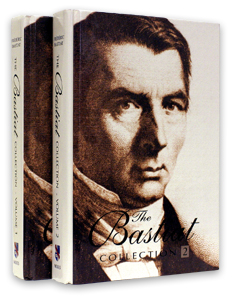
I got my Bastiat collection yesterday (available here online. WARNING, this is a large file…). It has a textbook kind of feel to the cover (which isn’t a bad thing) and a they did a great job on the printing and the paper they used. Be prepared for extensive quotes from this in posts to come…

B852.jpg

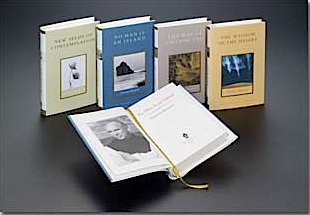
I also got “The New Seeds of Contemplation” by Thomas Merton. This book is precious! It is just the right size, somewhat smaller than the typical hardback book, cloth bound, and looks great on the inside. It even has a ribbon stitched into the binding (like a Bible) to mark your page. It turns out that Shambhala has put out 4 of Merton’s books like this and I haven’t read any of them! I can see some more of them in my future…

1590305043.jpg

On a lighter note…

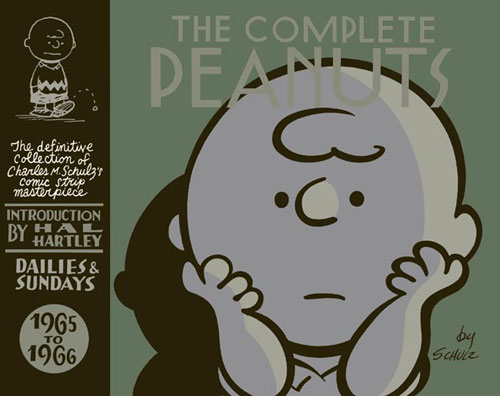
bookcover_cpea08.jpg

I also got some more of the Peanuts collection by Fanatgraphics. Wow, what a great job they’re doing. There have been various Peanuts collections done before, but they are publishing ALL of the strips Charles Schultz did in order. For those of us that love Peanuts, it is a dream come true. The books are wonderful as well and will withstand repeated readings with ease. It was a great Christmas for books! I’m going to hold onto these for a long time…

Categories
economics politics

Why is Obama spreading fear?

His remarks today basically amount to, “OMG! We need to do something now or else things will crash and burn! We need to do it now now now!!! Can’t you see how bad things are getting?”

A big part of consumer confidence is just that, confidence. If the next president, this so-called agent of hope and change, is saying that the end is near, are we so surprised that people aren’t spending money? Why on earth would they think that now is a good time to make purchases like houses, cars, etc. when the next president is saying we are on the brink of disaster?

So what should he do Isaac? Well, he should reassure us that the economy is going through a change, that things will not be the way they were before. But once those things that need to happen do happen (GM cough cough), the economy will pick up again. Even if that’s not the case, that is the message that he needs to spread, not doom and gloom. He doesn’t have to campaign anymore, he’s got the job.

Of course I know why he’s doing this. He sees this recession as a way of promoting his political aims. By making things sound awful, he makes it more likely that his ideas will come to pass because the politicians have to do something… Ugh…

Categories
culture

More on Israel and Palastine

Israel bombed a UN school in Gaza killing 40 something people. I wish I could say I was surprised, but I’m not. We’ve all known the capacity that Israel has for overreaction for quite a while. So has Hamas. And yet they, or at least people under their control in Gaza, continued to provoke Israel. I’ve been told that those rockets really aren’t much of a threat, certainly as compared to the Israeli air force. So I see a couple of possible scenarios.

1) The missiles being launched from Gaza do not really pose a real danger to Israel. This means that their launch is completely symbolic.

2) Hamas is actually trying to kill Israelis with those rockets. Of course since they can’t aim them very well, the potential targets are more or less at random.

I’m guessing that #2 is more likely. If #1 was the case, the best reaction Israel could have made was to sneer at the attempt. If people are in danger, the political pressure to retaliate would be unbearable. Everyone knows this.

The actual damage those rockets cause is up for debate, but their potential for damage isn’t really. As I wrote to a friend of mine, if you are constantly being threatened by an armed lunatic, is it wise to spit on him? What, exactly, will be accomplished by antagonizing him? What will be accomplished when he then uses those weapons to kill bunches of your people?

But they’re not idiots, there is a political upside to drawing Israel into a more active war and I’m pretty sure that’s why it keeps happening. People tend to paint this as an Israel/Palastine issue when it looks much more like an Israel/Hamas issue. I don’t think it’s a coincidence that this is happening in Gaza and not in the West Bank. Hamas needs conflict to remain politically viable. Part of me wonders if Hamas needs Palestinian casualties to remain popular… Cynical? Oh yeah, but Fatah doesn’t seem to have any of these characteristics and they don’t seem to be in the middle of death either. The same goes for the Israelis. There is a lot of popular support for killing Palestinians, so launching the occasional attack pays political dividends. It’s a true prisoners dilemma. Breaking the political benefits will end the hostilities…
Categories
culture

Oh please…

A friend’s facebook status says, “How can a country kill 500 people and get away with it? With other countries backing them? What kind of world do we live in?”

Huh, how bout I ask a few questions myself? “How can a group of people launch missiles at random (not caring who they kill) from a heavily populated area? How can a group of people do that and then be outraged at the civilian deaths that happen when the retaliatory strikes come? How can people launch attacks from populated areas with the understanding that the civilians are a shield? Do they expect to be able to launch attacks with impunity? No, they don’t, and no, they aren’t surprised with the casualties. They expect them, that is what is so repugnant to me. If you want to die for a cause, well then fine, but do not put other people in the firing line!

This is a war, people are going to die. I’m not trying to make light of the problems over there, people dying is never good. I do object to the one sided approach that a lot of people have when it comes to Israel and the Palestinians. We also need to keep things in perspective. If there was a clash in Africa with this many people killed, it might make the news, but there would not be any outrage to speak of. Why is that?

For the record, I think both sides perpetuate this, but that’s what the politics dictates. Neither side can be seen as being weak, so violence begets violence. Neither side has the right to be outraged, both sides knew exactly what was going to happen.

Categories
economics

When a tax cut isn’t a tax cut…

I’ve heard that Obama wants to use “tax cuts” in order to stimulate the economy. That’s sound enough, when people have more money they either spend it or save it. Either way is good for the economy. When the government has it, it tends to get wasted. In addition to that, it is not spent in the ideal way by the people that make the money. In other words, let’s say that person x really wants to take a trip to Hawaii, but since he has to pay income taxes, he can’t do it. This may not sound like a big deal, but if that money is not supporting Hawaian tourist services (i.e. something that people actually want) and is instead supporting, say, Lockheed Martin, that’s quite a distortion. That also goes for charity BTW…. Multiply that by 200 million or so and you can see how screwed up the distribution of money is…

So OK, tax cuts are a good thing, so what’s the big deal? Here’s the big deal, it is only a tax cut if you both cut the taxes people pay AND lower spending. You see, every dollar the government spends it gets through taxes. So any deficit the government runs is really just deferred taxes. It sounds as though Obama wants to cut taxes AND raise spending. That is, effectively, a tax INCREASE. Any additional deficit spending is an increase in taxes at some point. It will have to be paid back at some point. And yes, inflation isn’t technically a tax, but it might as well be, it has essentially the same effect…